

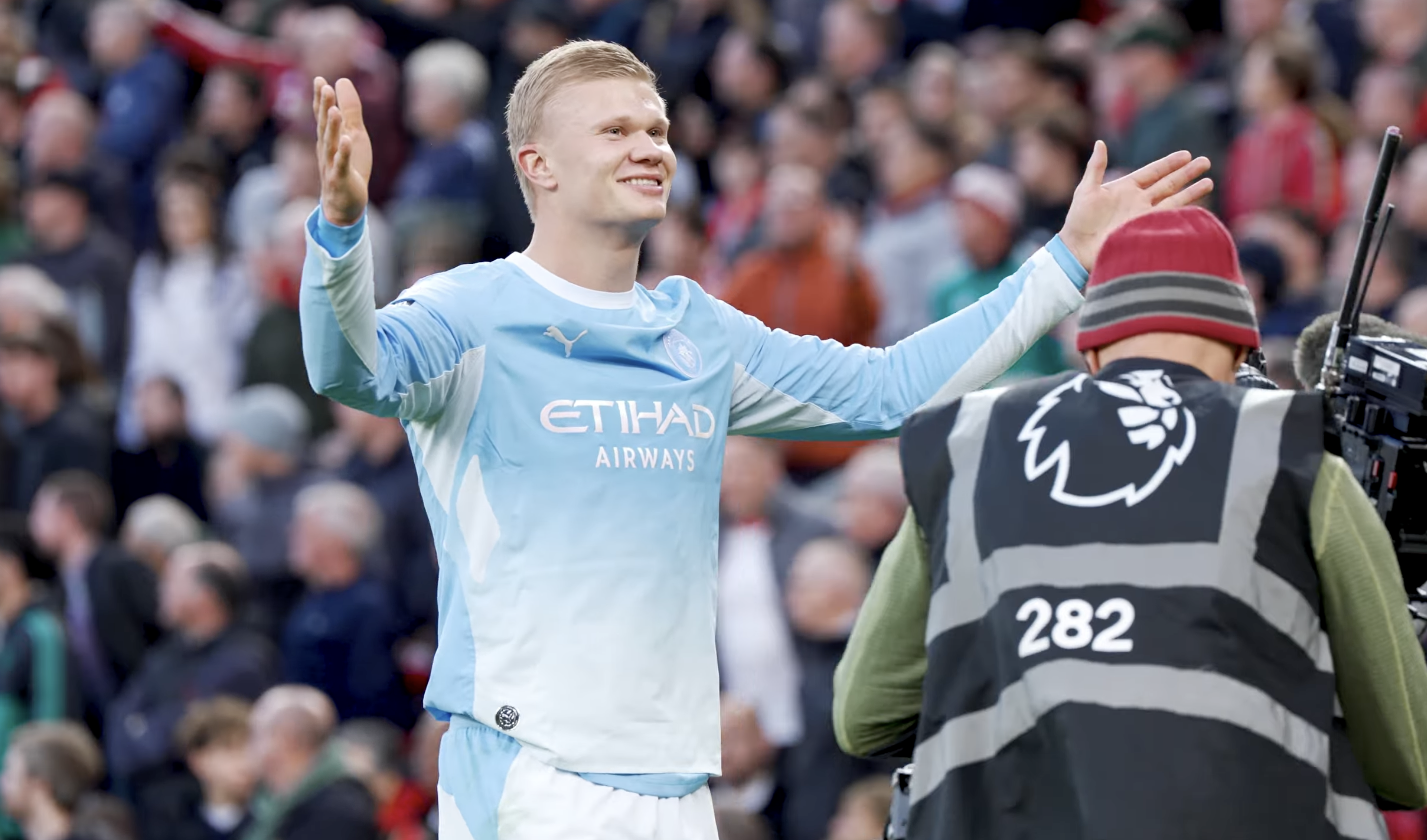

Nowadays, the pendulum has swung. With social media and ‘football experts’ everywhere, the meaning of a truly world-class player has become harder to fathom. Many suggest football has fallen off since the fabled 2010s, while others are blinded by club or player bias. So, what truly makes a world-class player, and how can we spot one in the modern game? This mini-series will go position by position, starting with strikers, as we evaluate how and why players are considered world-class.
Do People Value Numbers Or The Eye Test?

Probably the largest cohort of arguably world-class players can be found among the attacking outlets of teams. Goals win games. That is the nature of football, so when you have players consistently winning games, they will, more often than not, have a lower barrier to entry into the world-class conversation.
Players such as Erling Haaland or Kylian Mbappé don’t even need to be in the debate. They are world-class and have operated at that level for years. But what makes them world-class? This is where the conversation gets a bit deeper.
You will rarely see Haaland score a world-class goal, yet his attacking return since joining Manchester City in 2022 has been an absolute joke. 120 goals and 25 assists in 139 games in the world’s hardest league is something to ogle at. To the point where, if he continues on this trajectory (and City don’t get booted down the leagues), there has to be a conversation about him becoming the best striker to ever play the game. We’re arguably getting close to that as it is.


Not only is his attacking output world-class and then some, but so are his physical stature and his ability to simply be in the right place at the right time. Haaland is the perfect finisher. He can break lines, go one-on-one and have the composure to finish, whether that’s with a dink over the keeper or a shot slotted into the corner. But he is also the most instinctive finisher I have ever seen. His goal against Liverpool last weekend was a perfect example. The ball falls to him from a deflection, he pounces, getting there before Virgil van Dijk and, without a second thought, dispatching it past Alisson. Players like this are rare, and they become the defining players of their respective eras.
Mbappé is the same. Having been world-class since arguably the 2018 World Cup, he has spent years operating at the very top level. Having been somewhat overshadowed by players like Lionel Messi at PSG, Mbappé has had a slightly different journey. Having burst onto the scene as one of the most exciting talents at Monaco, he went on to spend years at PSG, dominating domestically but failing to deliver the most measurable form of success: the Champions League. PSG and Mbappé consistently failed to get over the line in Europe’s biggest competition. Until, of course, Mbappé’s move to Real Madrid, after which PSG went on to win back-to-back Champions League titles. Casting even more of a spotlight on the 27-year-old. That being said, his World Cup performances, his individual displays against the very best teams and his impressive attacking output all speak for themselves. Love him or hate him, Kylian Mbappé is world-class.
One thing that stands out to me time and time again is that both players have become victims of their own standards. Many said the pair had poor seasons last year. Haaland recorded 47 goal contributions in 52 games. Mbappé’s was even more impressive, with 49 goal contributions in 42 games. The pair have become victims of social media, where every miss and every bad game is amplified because everyone has seen the standards they have set. Haaland and Mbappé are the defining players of this new generation of footballers. They will continue on this path for at least another five years, potentially ten.
The Late Bloomers – How Players Become World Class
There are many strikers who have operated at a world-class level for a season or two. In recent memory, Alexander Isak had a couple of sensational years in black and white for Newcastle. Ultimately, an injury has halted his progress, but he could very easily hit those levels again. However, there are players who didn’t begin their careers as world-class talents.
Truth be told, not all players are on the level of Lamine Yamal, Erling Haaland or Kylian Mbappé. All of whom were expected to reach that level sooner rather than later, and did. Players such as Raphinha and Harry Kane took a lot longer to be considered world-class. Yet both players have had Ballon d’Or-calibre campaigns over the last couple of years.

Raphinha first made a name for himself at Rennes, where many top talents have emerged, before becoming a cult hero at Leeds United. He was the star, the one who helped keep them in the Premier League. Then came the move to Barcelona, where he was nearly sold to help ease the club’s financial troubles. He has constantly had competitors signed in his position, moving from right winger to left winger and then to striker, all while undoubtedly reaching and maintaining a world-class level. This year, in just nine games, the 29-year-old has 14 goals and three assists. Last year, despite injuries, he managed 29 goal contributions in 33 games. In 2024/25, his most prolific season to date, he reached 60 goal contributions in just 57 games.
That return alone would suggest that Raphinha is most definitely world-class. But context matters. Players like Lamine Yamal have stolen the show at times, often leaving Raphinha as second fiddle in the eyes of the media and wider public. Players like this, the late bloomers, often get overlooked. Then they sustain that level for three or four years, and it becomes inarguable that they belong in the conversation.
Harry Kane is the perfect example of this. At Tottenham, he was considered a top-level striker, arguably world-class. Since his move to Bayern Munich, he has been the top scorer in Europe. No striker has come close. A player who started out on loan at teams like Norwich has blossomed late in his career to become the best striker in the world alongside Haaland.

He is now considered one of England’s greatest-ever strikers, alongside Shearer. A Ballon d’Or this year would tip him over that edge without question. As a finisher, he is immense. No one finds the target as consistently as he does. For all of Haaland’s strengths, he does miss easy chances more often than you’d like. Kane does not. He will fashion chances from nothing. His goal against Congo at the World Cup this summer was a prime example of this. This is what separates the very best from the rest. Kane isn’t just a goalscorer; he’s a complete striker, capable of dropping deep, creating chances for others and dictating the game just as much as he can finish it.
For years, his numbers have spoken for themselves, at Tottenham as well as Bayern Munich, but it’s only now that the wider conversation is truly catching up. Haaland may be the ultimate goalscoring machine, but Kane offers something different. He has the numbers, the longevity and the all-round game to put himself firmly among the very best strikers of his generation.
Kane has two problems. One is Tottenham. A lack of trophies has made it harder to put him in conversations where Agüero, Rooney and Henry sit. The second is more his own fault. He just can’t show up on the big stage. Time and time again, he has failed to make an impact when it matters, whether in Champions League finals or World Cup finals. These are the moments that matter in a player’s career, the games that define legacies. Kane has failed to show up. Think of England’s best memories of recent years: Bellingham against Mexico, Palmer against Spain, Shaw against Italy or Watkins against the Netherlands. No Harry Kane. It puts a bullet in his legacy that he has failed in those moments. England fans recognise this as well, making it much harder to overlook.
Hot Take – Ousmane Dembele

Yes, he has had moments. But PSG have taken their star player and used him in a very particular way, managing his minutes and allowing him to miss weeks of football to ensure he is fully fit for their biggest games.
Dembélé is a perfect example of how world-class ability and world-class consistency are two very different things. When he is at his best, few players can match his ability to create something out of nothing. But being world-class is about more than what a player can produce on his best day. It is about how often they can reach that level, how much they influence games and whether they can sustain it over time. We’re at the point now where everyone can see Dembele has world class talent, but can he, in the last year be considered in the same bracket as a Kane, Haaland or Mbappe? I’d argue not.

Leave a Reply