
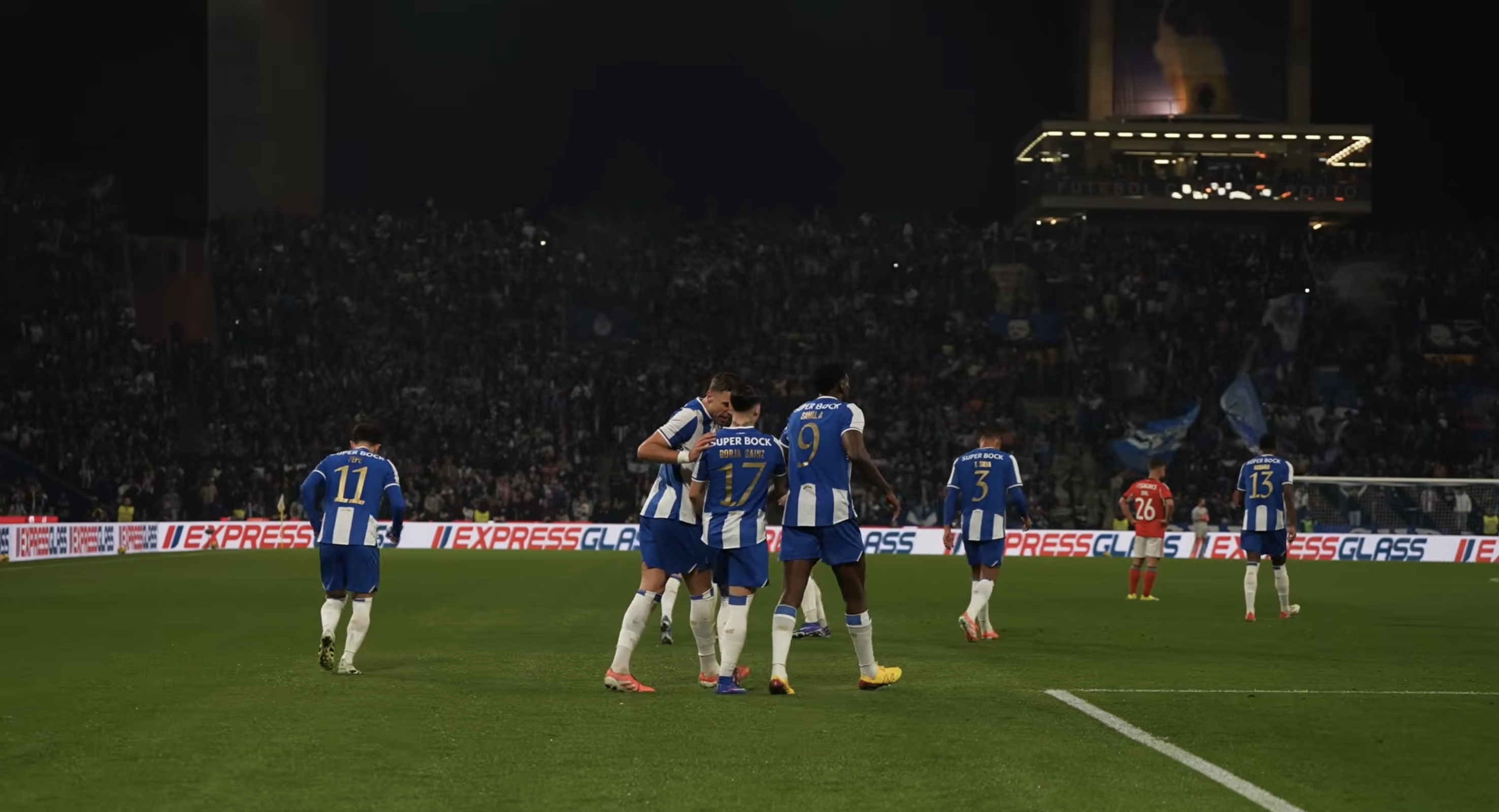
It has been four years since Porto last won the Liga Portugal and 21 years since Mourinho’s legendary Champions League victory. In that time, Porto have slid down the European rankings. However, this season they sit top of the Liga Portugal. Having gone undefeated so far, the Dragões will look to build on their momentum and their talented young squad to re-establish themselves in Europe. The first task: winning the Europa League this year.
The Squad

Porto’s squad this season feels carefully assembled, with each profile fitting a defined role rather than overlapping unnecessarily.
At the back, Thiago Silva’s return to Porto carries both symbolism and purpose. Having passed through the club’s B-team setup earlier in his career, he returns as a stabilising presence to a young backline. It appears this will be Silva’s last move before retirement. A perfect ending for one of the great centre backs in recent times.
In midfield, there is a clear balance. Rodrigo Mora, appears to be the next wonderkid to come out of Portugal. The 18 year old operates between the lines, drifting into space rather than occupying it. Keeping Porto’s tempo sharp in the final third. Still young, he already shows the ability to influence games without needing constant touches, a trait that marks him out as one of Portugal’s standout prospects.
Alongside him, Gabri Veiga adds a more direct edge. His role is about movement and timing, arriving late into attacking areas and driving forward when space opens. After a year away from Europe, Porto offers him the structure to re-establish himself at the level he reached during his time at Celta Vigo, when links to clubs like Manchester City felt inevitable.

Further forward, Samu Aghehowa has caught the eye for Porto. While he has scored 19 times, his importance is most obvious in how Porto attack around him. He gives the side a clear reference point, allowing them to play forward earlier and with more intent once possession is secured in midfield.
His presence in the box is constant. Samu averages 3.56 shots per 90, placing him among the most active forwards in the league, and he ranks in the 90th percentile for touches in the opposition penalty area, a reflection of how often Porto are able to find him in dangerous positions. Rather than waiting on the last line, he is repeatedly involved in the final action.
Samu’s movement across the front line also shapes Porto’s attacking structure. He drifts laterally, occupying centre-backs and creating space for runners from midfield. When play breaks down, he is comfortable attacking defenders directly, ranking in the 90th percentile for successful take-ons, giving Porto a forward capable of creating his own chances when service is limited.
Rather than functioning as a pure finisher, Samu helps set the tempo of Porto’s attacking play. His combination of movement, volume shooting and ball-carrying has made him central to how Porto sustain pressure in the final third.

Samu Aghehowa is almost certainly the next expensive striker, most likely to a Premier League side. Chelsea, Atletico Madrid, Arsenal and Tottenham have all been linked with the striker.
Out wide, Borja Sainz brings intensity and width, shaped by his time at Norwich City in the Championship. His willingness to attack full-backs and work without the ball helps Porto maintain balance across both phases.
Tactics And Transfers- How Porto Rebuilt
Porto’s resurgence this season has been shaped as much by decision-making off the pitch as by structure on it. The summer sale of Francisco Conceição to Juventus for €32 million, followed by João Mário also moving to Turin, marked a clear reset. Rather than weakening the side, those exits opened space for a more balanced squad build.
At right-back, Alberto Costa, signed in the summer, has been one of the most influential figures in the team. With six assists, he currently leads Porto’s assist tally, a reflection of how often he is involved in the final phase of attacks. Costa provides width and delivery, allowing Porto to stretch teams without relying on their wingers staying wide.

In build-up, Porto continue to operate from a 4-2-3-1, but the structure adapts depending on pressure. One of the deeper midfielders will drop into the defensive line, forming a temporary back three alongside Thiago Silva, Kiwior and Froholdt. This gives Porto numerical security at the back and allows the full-backs, particularly Costa, to push high and hold their position.
That structure helps explain Porto’s control in possession. By committing a midfielder deeper, they draw opposition pressure forward, which opens space between the lines. Rodrigo Mora is often the main beneficiary, receiving in pockets rather than dropping deep to find the ball himself.
Defensively, Porto rely on experience and positioning. Thiago Silva brings calm and leadership, while Jakub Kiwior adds balance on the left side of the defence, comfortable stepping out when required but disciplined enough to hold the line. The back line rarely defends high for long periods, instead retreating quickly into shape once pressure is broken.
The midfield balance has also been refined by recruitment. Gabri Veiga’s return from Saudi Arabia has added a direct running threat and a willingness to attack space late, something Porto lacked in previous seasons. His role is not to dictate tempo, but to disrupt defensive structures once Porto progress the ball into advanced areas.
Out of possession, Porto are compact and patient. They do not chase the ball unnecessarily, preferring to block central lanes and guide opponents wide. When possession is lost, the reaction is measured rather than frantic, allowing the team to reset before engaging again.
This combination of smart sales, targeted recruitment and clear structure has underpinned Porto’s form. Sitting top of the Liga Portugal with 17 wins and one draw, and navigating the Europa League with control rather than chaos, the Dragões look like a side rebuilt with intent rather than nostalgia.


Leave a Reply